Same photo, two different objects on the wall. Glare, texture, weight, longevity, rooms and the shape of the cost — an honest comparison from our Timperley workshop.
Print the same photograph twice — once on canvas, once on paper behind glass — and you get two genuinely different objects. Not a better one and a worse one: different. One is a soft-surfaced, frameless block of colour that hangs like a painting; the other is a crisp sheet held in a mount behind glass, presented like a photograph. Which is right depends on the image, the room and what you want the wall to do, so here’s the honest comparison from our Timperley workshop. One thing this guide is not about is print quality — papers, inks and what the word giclée actually means are a separate question, answered in our guide to giclée vs fine art prints.
Two objects, one image
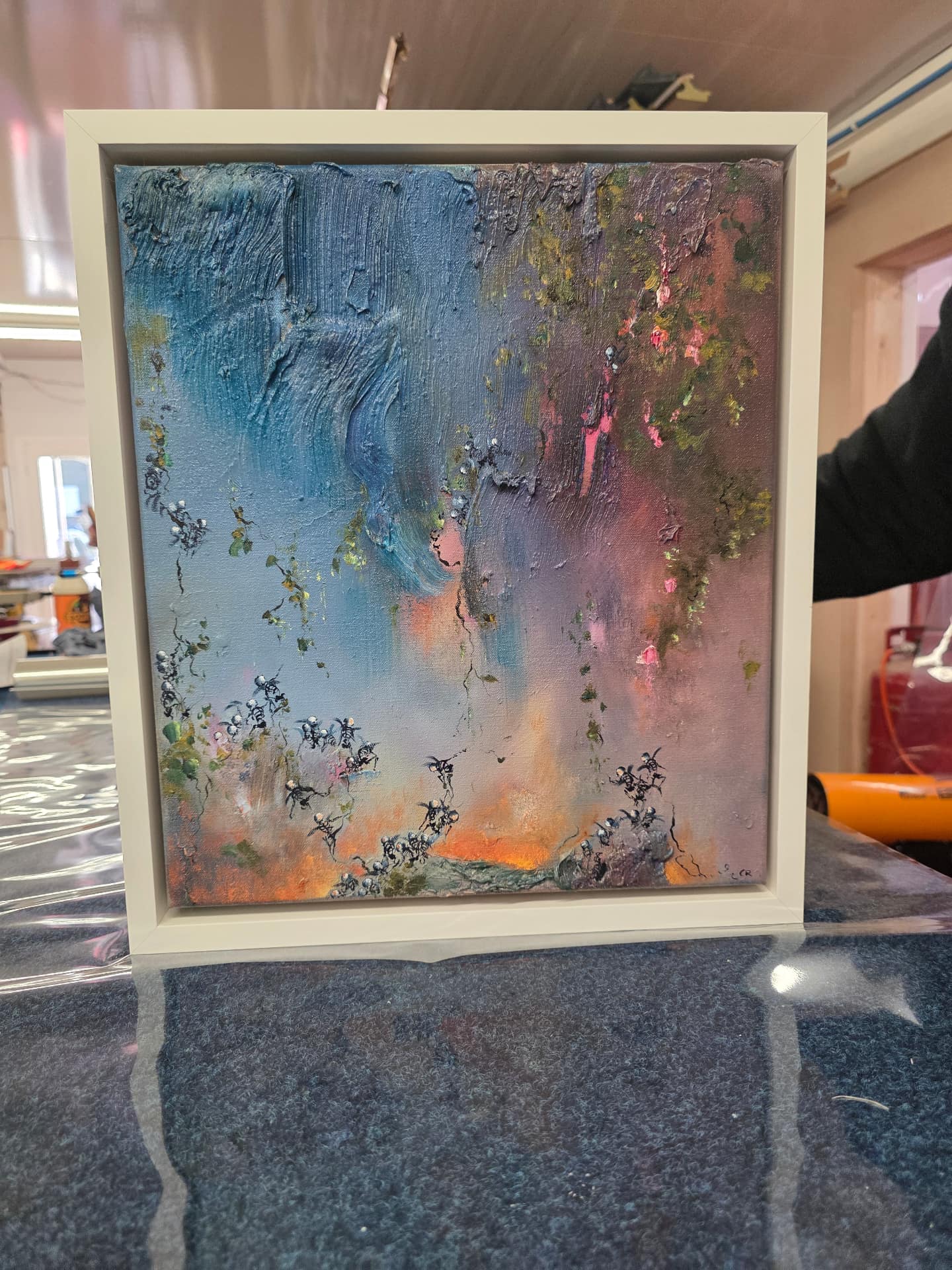
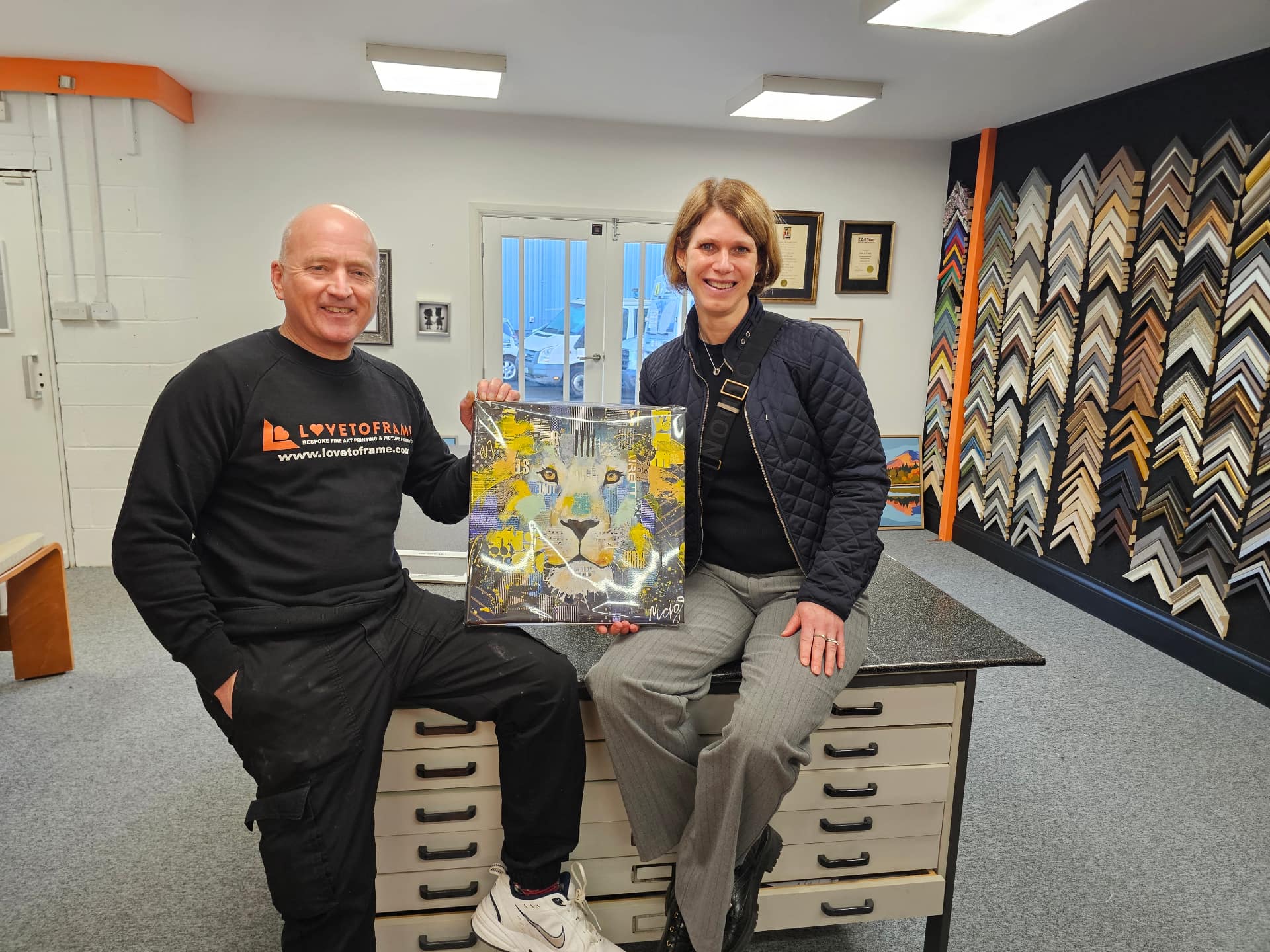
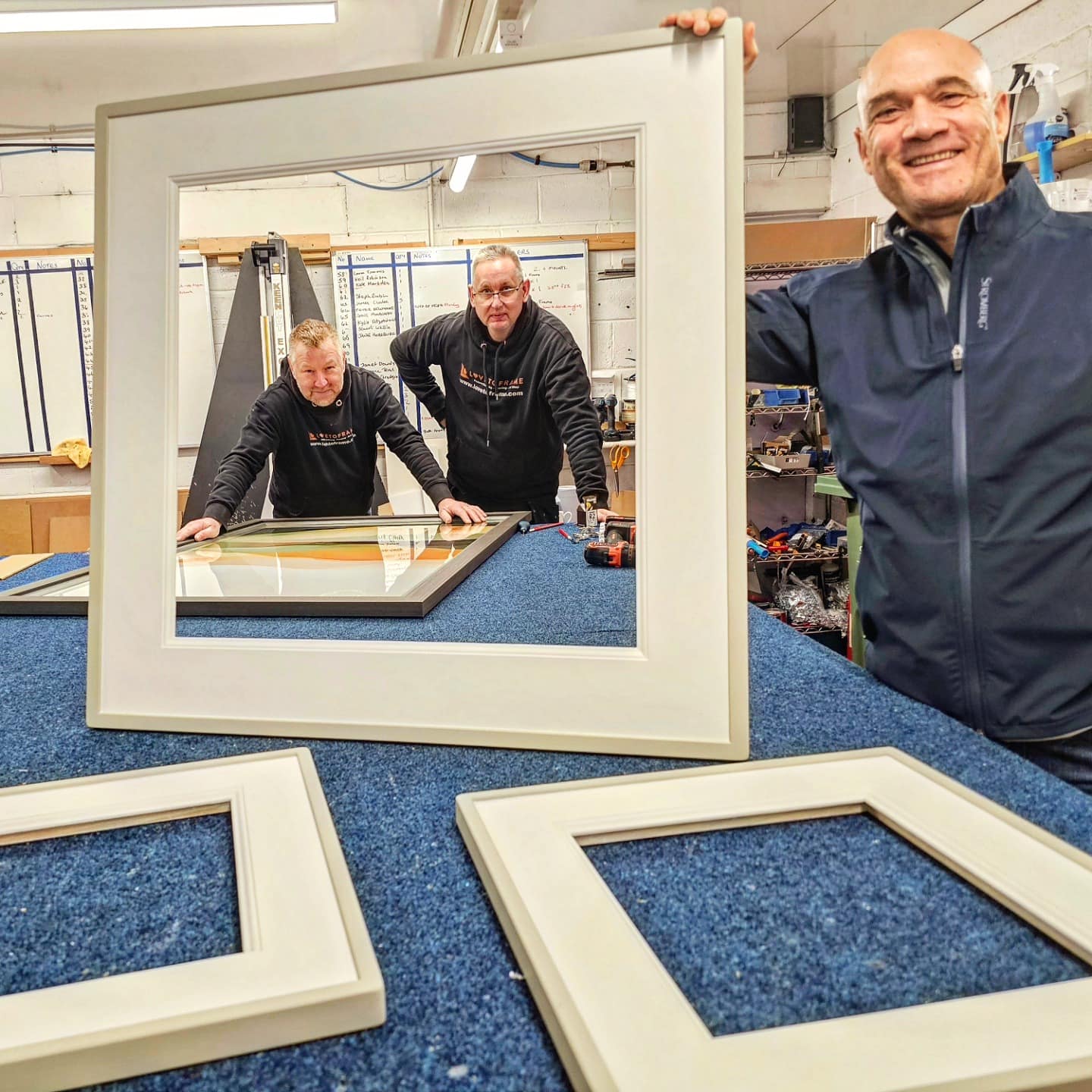
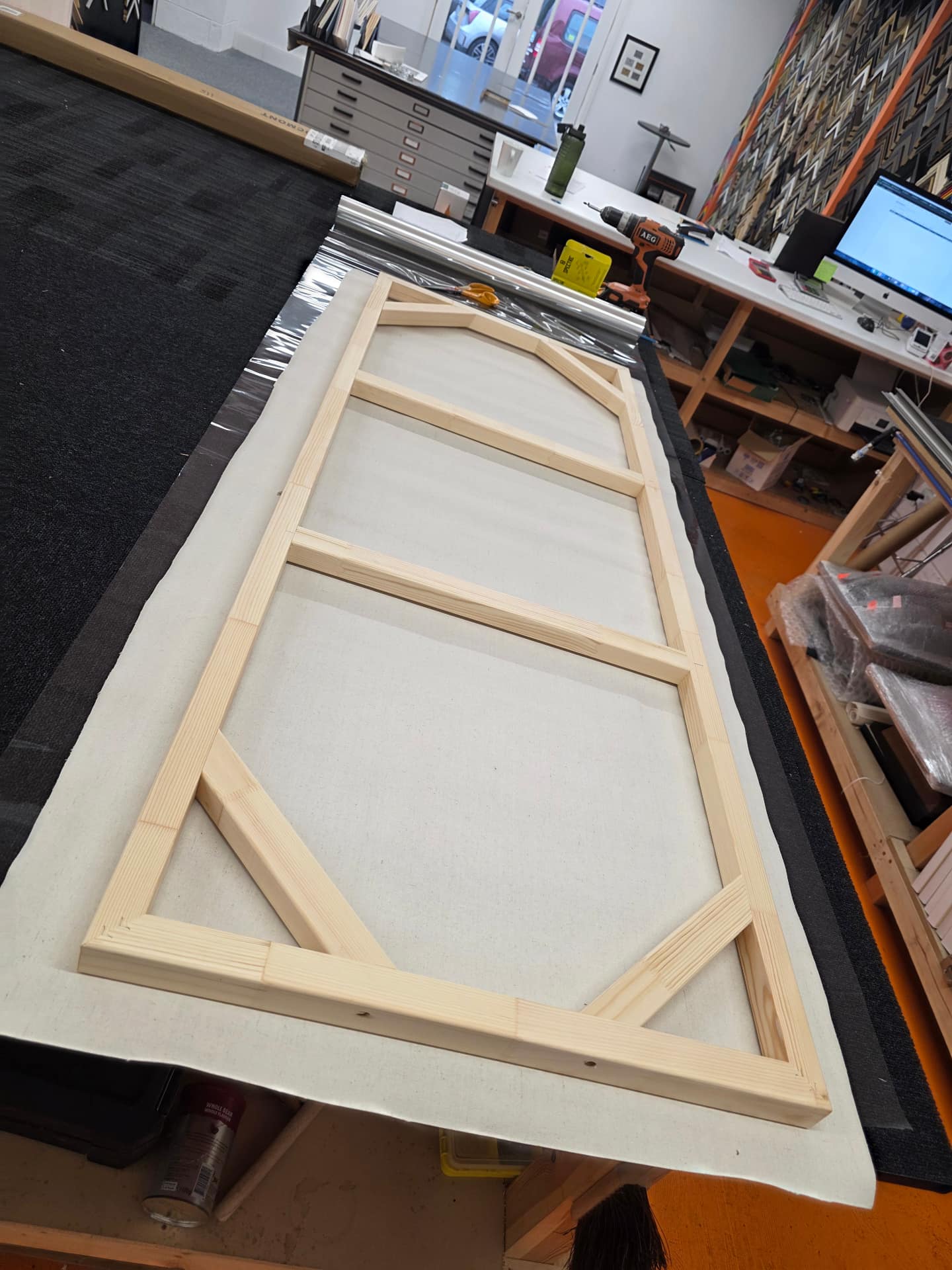
A canvas print is your image printed onto heavyweight cotton canvas, hand-stretched around kiln-dried pine bars in our workshop and finished ready to hang — no glass, no mount, no visible frame unless you choose to add one. The picture doesn’t stop at a border: the image either wraps around the sides or meets a mirrored or coloured edge, so the whole object reads as one continuous piece of colour. That’s our custom canvas printing service.
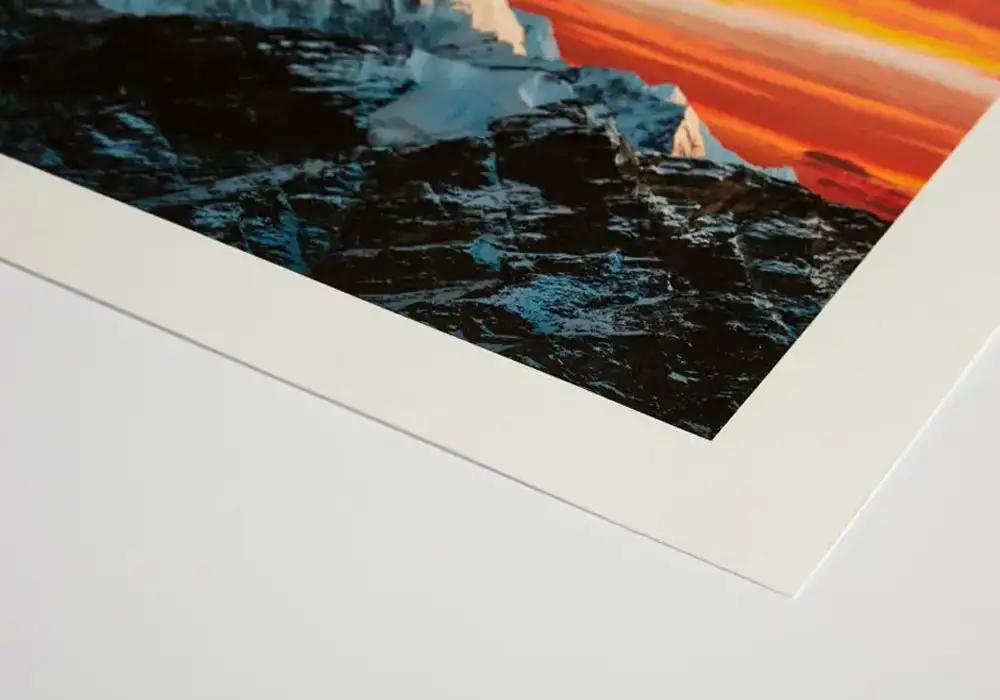
A framed print is the same image printed on fine art paper through our fine art printing service, then set in a window mount and sealed behind glass in a moulding chosen to suit it, built by our custom picture framing team. The mount and moulding become part of the design, and the glass puts a physical barrier between the print and the room.
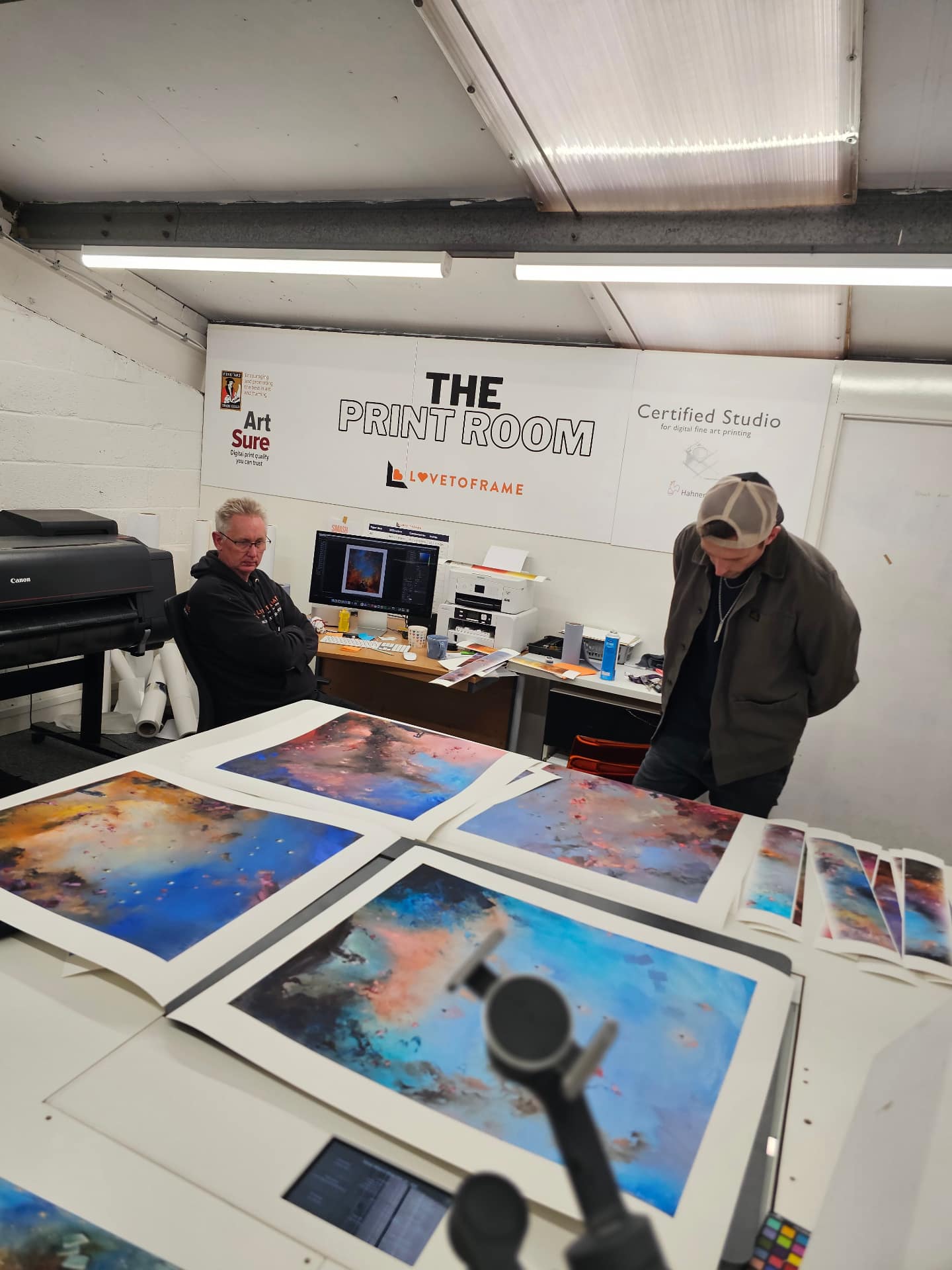
Same master file, same pigment inks, same workshop. Everything that follows is about how each object behaves once it’s on a wall.
Glare and glass
Glass reflects. Hang a framed print opposite a window or under a bright lamp and, from some angles, you’ll see the room as clearly as the picture. Anti-reflective glazing largely removes the problem — and the full protective package behind that choice is the subject of our guide to conservation picture framing. What glass gives in return is real: a sealed barrier against dust, splashes, steam and curious fingers, with UV-filtering options that slow fading.
A canvas has no glass at all, which means no glare from any angle — a matt, light-absorbing surface that stays readable opposite windows, up stairwells and under spotlights, exactly where glazed pictures turn into mirrors. The trade is that the printed surface is also the outer surface. Dust settles on the image itself, there’s nothing between the print and a steamy or greasy room, and there’s no UV barrier — so keep a canvas out of direct sunlight. Our guide to caring for original artwork covers light and placement, and the advice transfers wholesale to prints.
Texture: weave against paper
Run your eye across a canvas print and you’ll see the weave of the cloth through the ink. That texture softens the very finest detail and lends the image a slightly painterly quality — which is precisely why people choose it. Across a room, a canvas reads as rich, confident and frameless; up close, the weave is part of what you’re looking at.
Paper is the opposite. A smooth fine art surface holds every pixel of a sharp file, and a mount and frame invite exactly the close viewing that detail rewards. As a rule of thumb:
- Pin-sharp photographic detail favours paper — architecture, wildlife, and portraits or group shots where faces will be studied from a foot away.
- Bold colour and shape favour canvas — abstracts, seascapes, painterly edits and anything that works as a mass of colour rather than a lattice of fine lines.
- Large statement pieces favour canvas — over a sofa or a bed, canvas carries scale without enormous panes of glass, and our 38mm Deep Edge bars give it a gallery-style presence.
- Canvas is forgiving of imperfect files. A phone photo enlarged well past its comfort zone looks softer on smooth paper, where there’s nothing to hide it; the weave of a canvas quietly absorbs that softness.
If you go the paper route, which surface suits which image is a decision of its own — our guide to the best paper for giclée prints walks through it.
Longevity, honestly
Both objects are made with pigment inks rated in decades, so neither is going to fade in a season. What differs is exposure. An unglazed canvas takes the room as it comes — UV, humidity swings, cooking air and dust land directly on the printed face. A paper print behind UV-filtering glass is simply the better-defended object, and behind museum-grade glazing it’s the best-protected print we make.
That’s not a reason to be nervous of canvas. In a sensible spot — out of direct sun, in a dry room — a pigment-ink canvas will look right for many years. It’s a reason to think about where each object is going, which is the next section.
Rooms, weight and safety
Hallways, landings and stairs. This is where canvas earns its keep: it’s light, there’s no pane of glass to worry about above a staircase, and it hangs happily from modest fixings in narrow spots where things get knocked. A large framed print with glass is a heavy object that deserves a proper wall fixing.
Children’s rooms and rented homes. Canvas again, for the same reasons — nothing to shatter, and light enough for a single picture hook in plasterboard.
Kitchens. Either works away from the hob, but here the framed print has the practical edge: airborne grease wipes off glass in seconds, whereas a canvas surface should never be scrubbed.
Bathrooms. Honestly — humidity argues against both. Steam cockles paper and can slacken canvas, so a properly steamy bathroom is no place for a print you care about. If a wall in there must have something, make it something you’d be relaxed about replacing.
Very large sizes. Glass weight climbs steeply as pictures grow. A big canvas stays manageable — larger sizes get heavy-duty internal bracing, and the whole object still hangs from a couple of hooks.
What each costs — the shape, not the numbers
We keep prices in the calculators, where they’re always current — but the shape of the two costs is worth understanding before you compare. A canvas print includes its own structure: print, bars, stretching and fittings arrive as one finished object, and the price moves mainly with size, bar depth and edge treatment. A framed print is a stack of separate decisions — the print itself, then mount, moulding and glazing, each with its own range — which means more control over the final look, and more ways for the total to move in either direction. Neither route is automatically the dearer one. For live figures, size your image up in the canvas printing calculator and — for standard print frames up to A1 — the picture framing calculator, and compare like for like. For larger or float-framed work, send us the sizes and we’ll quote both routes.
The short answer
| Canvas print | Framed print | |
|---|---|---|
| The image | Bold colour, painterly texture, large statement pieces | Fine photographic detail, subtle tones, close viewing |
| Glare | None — there’s no glass | Present with standard glass; largely gone with anti-reflective |
| Protection | Surface open to the room | Sealed behind glass, with UV-filtering options |
| Weight & safety | Light, nothing to break | Heavier; glass deserves respect on stairs and in children’s rooms |
| The look | Frameless, contemporary, gallery | Classic, finished, formal |
| Cost shape | One object, priced by size, depth and edge | Print plus mount, moulding and glazing, chosen separately |
Common questions
Can a canvas print be framed as well? Yes — canvases sit in tray (float) frames, still without glass, which adds a clean border without losing the unglazed character. When that’s worth doing is covered in our guide to framing a canvas painting.
What happens at the edges of a canvas? You choose when you order: the image can wrap around the sides, the sides can be a plain white or coloured border, or we can mirror the last stretch of the image so nothing on the front is lost around the corner. Wrap-around suits images with room to spare at the edges; a mirrored edge protects faces or detail that sit close to the border.
Which lasts longer? Behind UV glazing, the framed paper print — it’s the better-protected object. But both use the same long-life pigment inks, and a canvas hung out of direct sun in a dry room will look right for many years. Placement matters more than the format.
How long does each take? Canvas work and picture framing both leave us in 2–3 weeks, built in the same Timperley workshop, then collected in person or shipped UK-wide by insured courier.
Still torn? Send us the photo and tell us which room and which wall it’s for. We’ll tell you honestly which of the two we’d make — and if the image would suit one far better than the other, we’ll say so before you spend a penny.
Ready to start a project?