What conservation framing actually means, the materials behind it, when it’s worth paying for and when standard framing is honestly fine — plain-spoken advice from our Timperley workshop.
“Conservation framing” is one of those phrases that gets used a lot and explained rarely. Almost every framer claims it; very few tell you what actually changes inside the frame, or whether your piece genuinely needs it. So here’s the honest version from our Timperley workshop — what conservation framing really means, the materials that do the work, and when standard framing is perfectly fine.
What conservation framing actually means
Strip away the jargon and conservation framing comes down to one principle: reversibility. Nothing is done to the artwork that can’t be completely undone. In fifty years’ time, a framer should be able to open the frame, release the hinges and lift the piece out exactly as it went in — no adhesive residue, no acid staining, no trimmed edges, no evidence it was ever framed at all.
That single rule drives every material choice. It’s why originals are never dry-mounted — permanently heat-glued to a board — never trimmed to squeeze into a ready-made frame, and never stuck down with masking tape or ordinary sticky tape. Every one of those is a one-way door, and every one of them cuts the value of an original or a signed limited edition, often dramatically. Auction houses and galleries check for exactly this.
The materials stack: what changes inside the frame
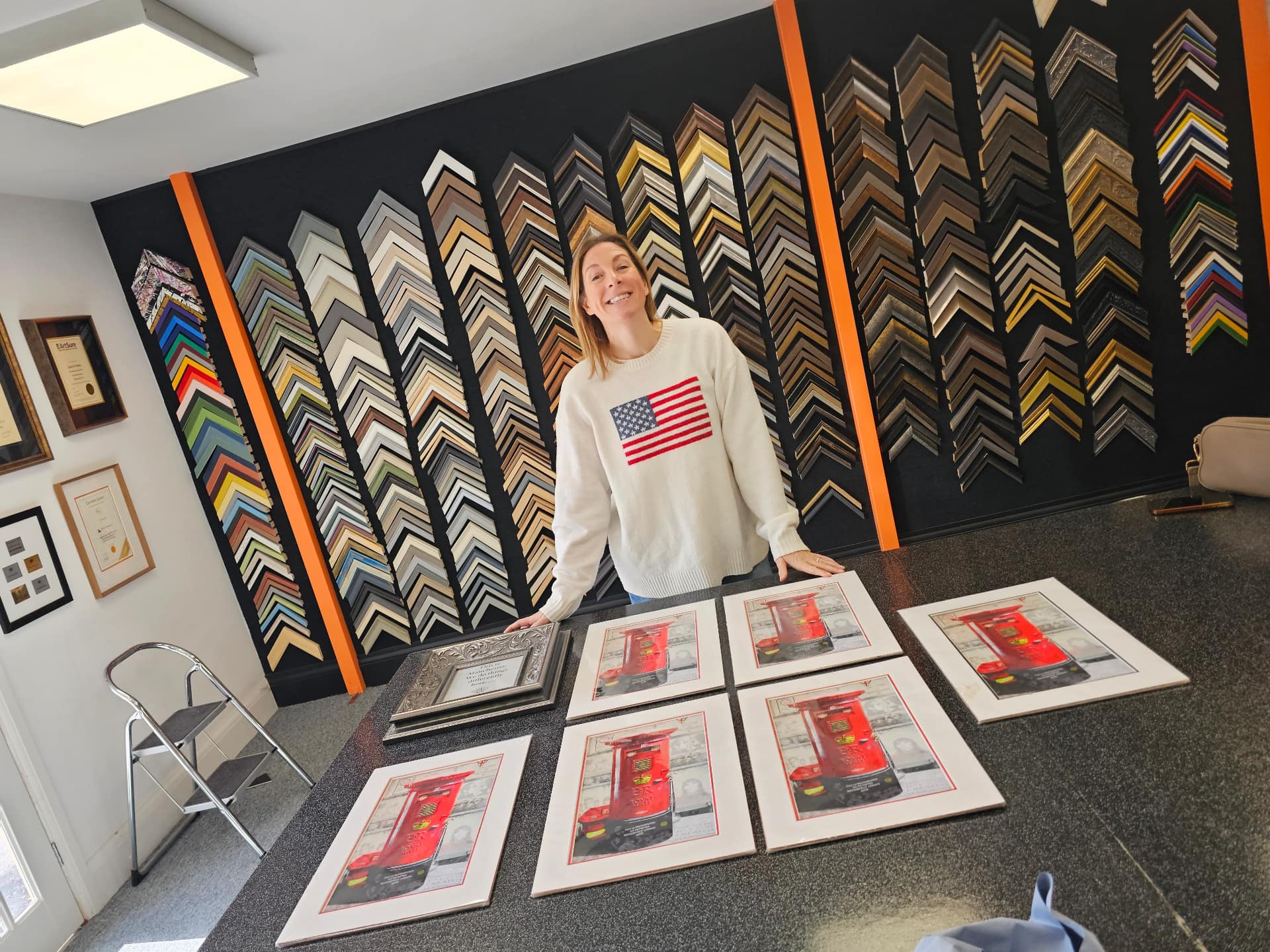
From the outside, a conservation frame looks like any other well-made frame. The difference is everything touching the artwork.
The mountboard. Standard mountboard is made from wood pulp that still contains lignin, and as lignin breaks down it releases acid into whatever it touches. That acid is what causes mount burn — the tell-tale brown line around the aperture of an old frame — along with general yellowing and the rusty freckles known as foxing. Conservation-grade boards remove the problem at source: alpha-cellulose board has the lignin chemically removed and is buffered to stay acid-neutral for decades, while 100% cotton museum board is naturally acid-free and lignin-free — the standard museums specify for works of genuine value. Our mounts are cut from acid-free conservation board as standard, in single, double, V-groove and float styles.
The hinging. In a conservation frame the artwork hangs from small hinges of acid-free tissue fixed with reversible, water-release adhesive — strong enough to hold the piece flat, gentle enough to release without a trace. What you’ll never see us do is dry-mount an original. It makes a print look perfectly flat, which is why it’s tempting, but it’s permanent — and permanent is exactly what conservation framing exists to avoid.
The backing. Behind the artwork sits an acid-free barrier board, and the whole frame is sealed at the back against dust, insects and airborne pollution. It’s an unglamorous detail that makes a real difference over twenty or thirty years on a wall.
Museum glass vs UV glass vs standard: an honest comparison
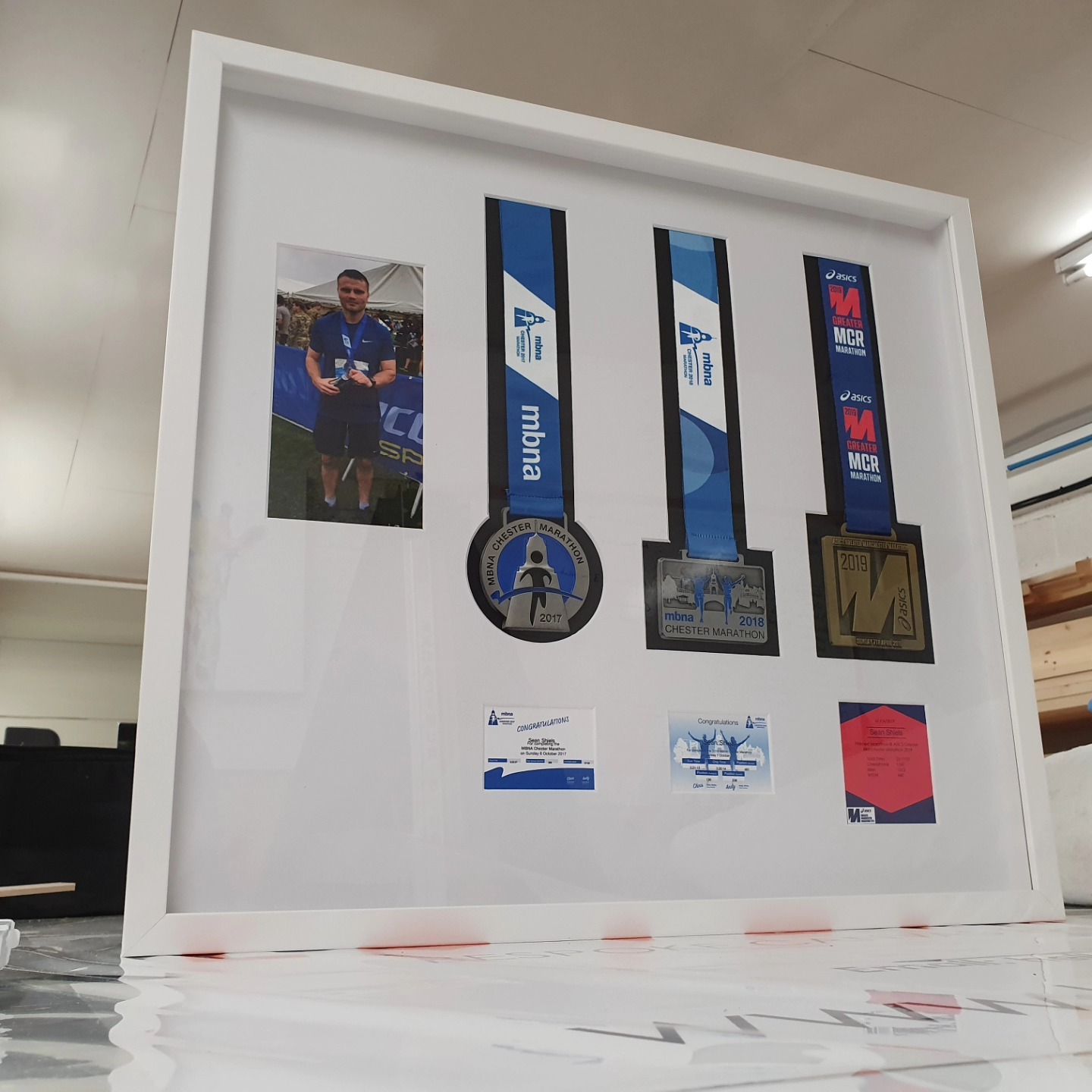
Glazing is where the biggest protective gains — and the biggest price differences — live. UV light is the main reason artwork fades, and the three common options handle it very differently:
| Glazing | UV protection (approx.) | The look |
|---|---|---|
| Standard framing glass | 20% | Clear, with normal reflections |
| AR70 premium glass | 70% | Anti-reflective — the glass virtually disappears |
| AR99 museum glass | 99% | Anti-reflective, with maximum UV defence |
Two honest notes. First, UV protection slows fading dramatically but nothing makes a piece immune — even behind museum glass, don’t hang anything precious in direct sunlight. Second, both upgrades are anti-reflective as well as protective: because they remove almost all reflection, you simply stop noticing the glass. Of every upgrade we offer, it’s the one customers thank us for most. AR70 is the professional standard for everyday framing; AR99 museum glass is the one for anything valuable or irreplaceable — and we cut all three to size in-house.
When conservation framing is worth paying for
The question we’d ask about any piece is simple: could you replace it, and would it hurt to lose it? Conservation framing earns its keep on:
- Original artwork — watercolours, drawings, pastels and anything on paper, which are the most acid-sensitive things we frame
- Signed and numbered limited editions — where condition directly affects resale value
- Certificates and documents — degrees, commissions, historic letters and maps
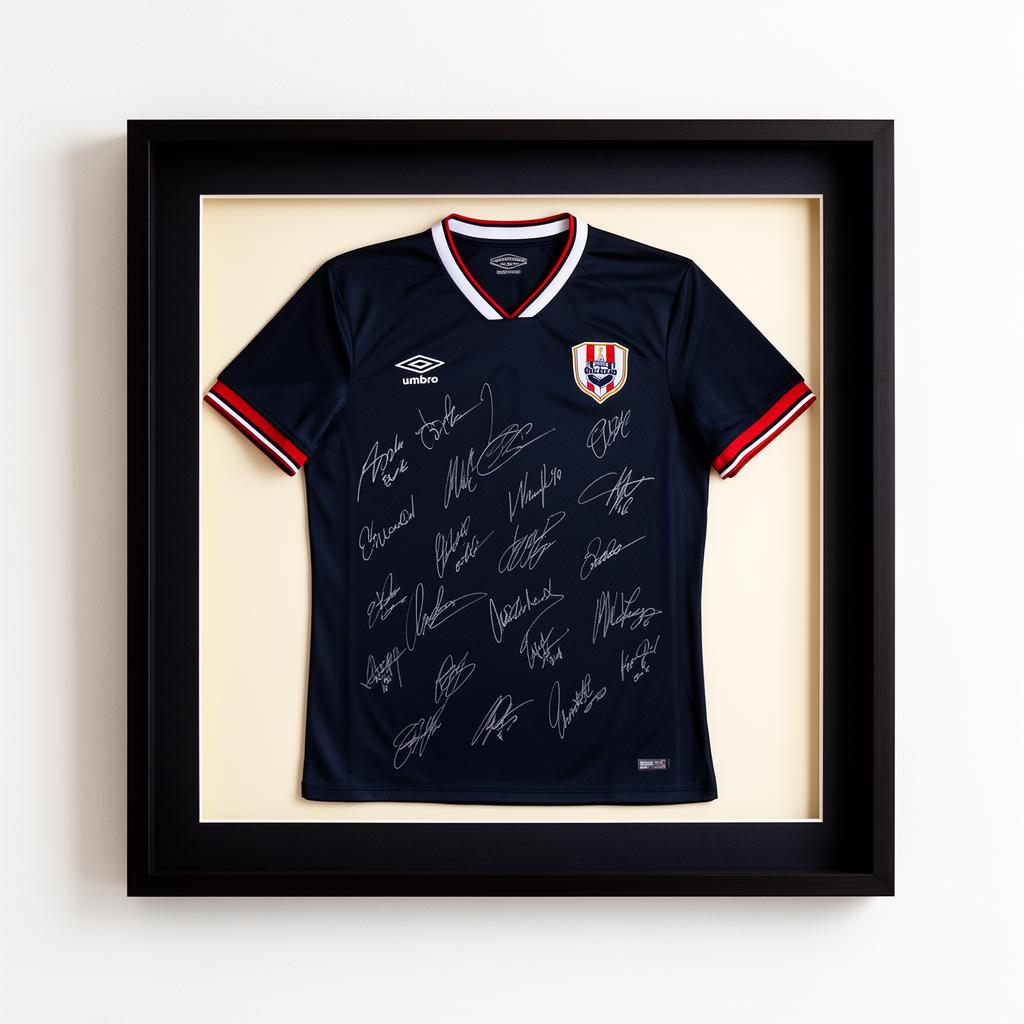
- Textiles — christening gowns, signed shirts and military uniforms, where fabric dyes fade fast
- Anything irreplaceable — a child’s drawing, a grandparent’s photograph, a one-off gift
If the piece is original or sentimental, it’s also worth reading our companion guide to caring for original artwork — framing is only half the story of keeping a piece well.
When standard framing is honestly fine
Not everything needs the full treatment, and we’ll tell you when it doesn’t. An open-edition poster, a mass-produced decor print, a photo you can reprint from a file in thirty seconds — standard framing with ordinary float glass will present those beautifully, and if the print fades in fifteen years you can replace it for less than the glazing upgrade would have cost. Good framing should be proportionate to what’s inside it. That’s not us talking you out of an upsell opportunity; it’s just the truth.
Warning signs an existing frame is damaging a piece
A lot of the conservation reframing we do starts with someone noticing one of these:
- A brown line around the mount aperture — classic mount burn from acidic board
- Rusty brown freckles on the paper — foxing, encouraged by acid and damp
- Ripples or cockling — the piece has been stuck down or is reacting to moisture trapped in the frame
- Faded patches — colours noticeably paler than the edges hidden under the mount
- Artwork touching the glass — over time it can stick, especially photographs
- Brittle, yellowed tape visible on the back of the frame
If any of those sound familiar, don’t panic — but don’t leave it, either. This kind of damage is progressive, and the earlier a piece comes out of a bad frame, the more of it we can save. Bring it in and we’ll open it carefully, tell you honestly what’s happening, and reframe it with conservation materials.
What does conservation framing cost?
Less than most people fear. The frame itself — the moulding, the cutting, the joining — costs the same either way, and that’s usually the biggest share of the price. The conservation uplift comes from the board, the hinging and the glazing, and for a typical piece it’s a modest step up rather than a multiplication. The single biggest variable is glass: AR99 museum glass is the premium option, AR70 sits comfortably in the middle, and for many pieces that middle option is the sweet spot. Our picture framing calculator gives an instant price for your exact size, mount and glazing — and it’s worth weighing that difference against what’s actually in the frame. Spread over decades on the wall, protecting an irreplaceable piece properly is some of the cheapest insurance you’ll ever buy.
Common questions
Is conservation framing the same as museum framing? Same principles, different tier. “Museum framing” usually means the top of the range — 100% cotton museum board and museum glass — while conservation framing covers the same reversible, acid-free approach at more everyday budgets.
Can you upgrade a frame I already own? Usually, yes. If you love the existing moulding we can keep it and replace everything inside — mount, hinging, glazing and backing — to conservation standard.
Does conservation framing take longer? No — it runs on the same timescale as our bespoke picture framing, typically 2–3 weeks.
Will conservation glass change how my artwork looks? Only for the better. You can’t see UV protection — and because AR70 and AR99 museum glass are both anti-reflective, the reflections that sit between you and the artwork all but vanish.
Weighing up whether a piece deserves conservation framing? Send us a photo and tell us its story — we’ll recommend the right board and glass honestly, and if standard framing will do the job, we’ll say so.
Ready to start a project?