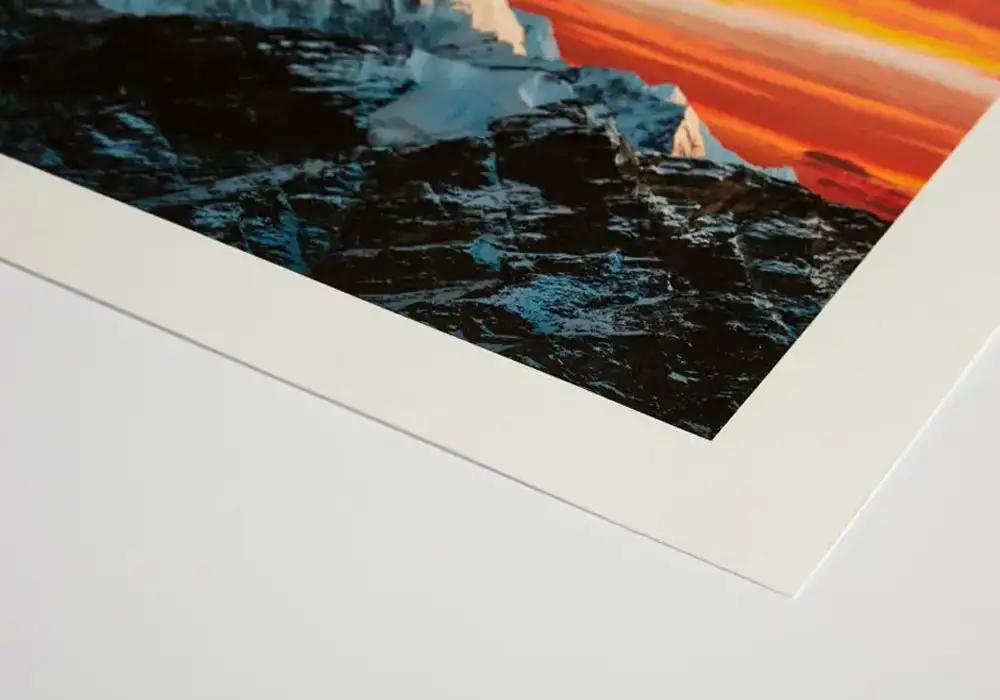
Giclée, fine art print, archival print, museum print: we explain what each term means, what matters, and how to choose the right print for your artwork.
If you’re buying or selling art prints, you’ve probably seen the words giclée, fine art print, archival print and museum print used almost interchangeably. They’re not exactly the same thing, and the difference matters when you’re deciding what to put on your wall — or what to sell to a collector. Here’s the plain-English version from our Timperley print room.
What is a fine art print?
A fine art print is any print made to a higher standard than a standard poster or photographic print. That usually means:
- Archival, acid-free paper (often 100% cotton or alpha-cellulose)
- Pigment-based inks rather than dye-based inks
- A wide-gamut printer calibrated for colour accuracy
- Longevity ratings of 75–100+ years under glass
In other words, “fine art print” is a quality category. A giclée print is a type of fine art print, but not every fine art print is technically a giclée.
What is a giclée print?
Giclée comes from the French word for “squirt or spray,” which describes how the inkjet nozzles apply ink to paper. Today it has a more specific meaning in the art world: a giclée print is a high-resolution fine art print made with pigment inks on archival paper, usually on a professional 8–12 colour printer.
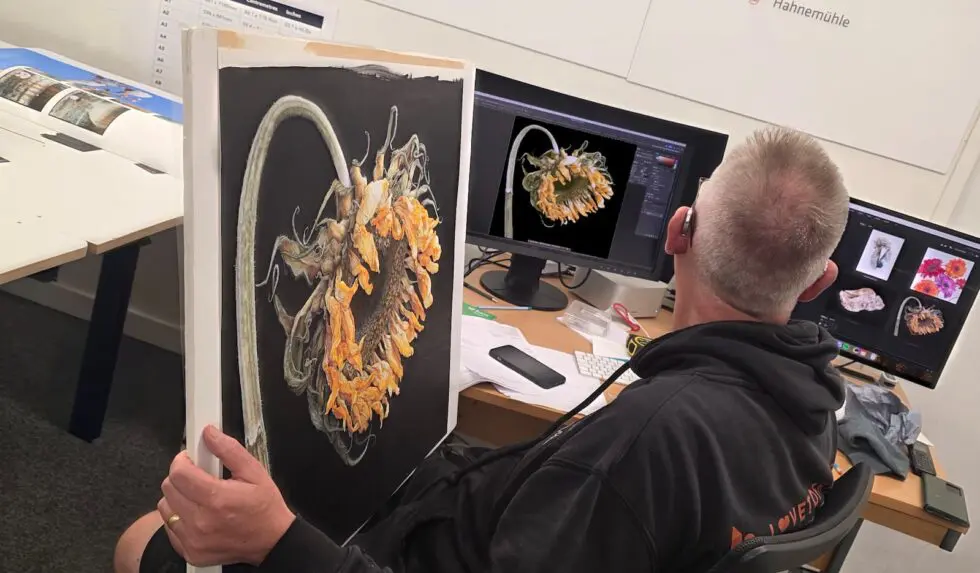
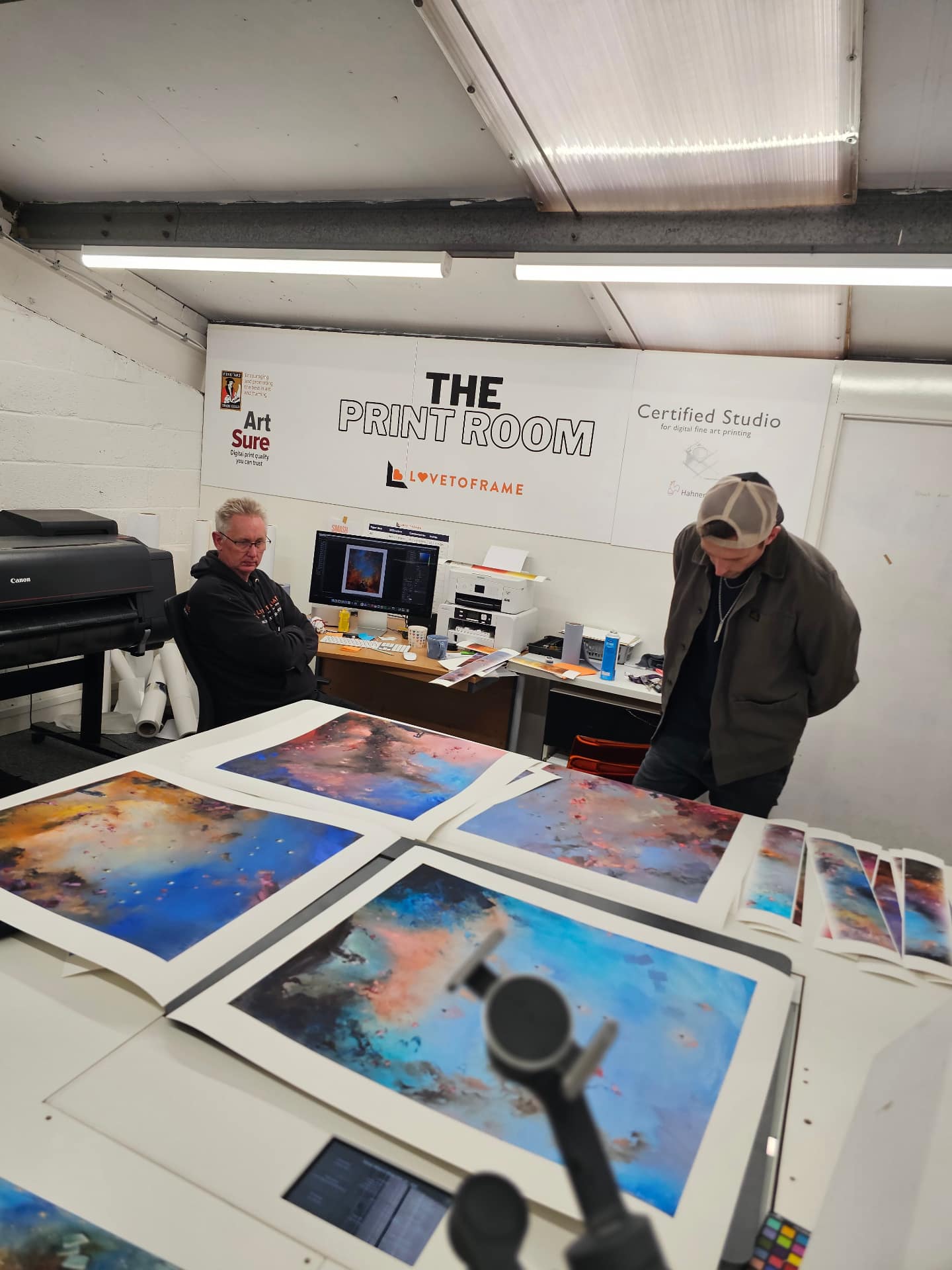
At Love to Frame, our giclée prints are produced on a Canon imagePROGRAF PRO-4600 with 12 pigment inks on Hahnemühle archival papers. That combination is what gives the deep blacks, smooth gradients and colour accuracy that collectors and galleries expect.
So what’s the difference?
| Feature | Standard fine art print | Giclée print |
|---|---|---|
| Inks | Pigment or dye | Pigment only |
| Paper | Archival paper | Archival, often 100% cotton |
| Printer | Wide-format or photo printer | Specialist fine art printer |
| Resolution | High | Very high (300–1440dpi+) |
| Colour range | Good | Very wide gamut |
| Typical lifespan | 50–100 years | 100+ years |
| Best for | Open editions, displays, portfolios | Limited editions, collectors, resale |
In practice, many artists and galleries use the two terms loosely. What matters more than the label is the combination of paper, ink and printer — and whether the printer can show you a colour-matched proof before you commit to a full run.
When should you choose a giclée print?
Choose giclée when the print needs to be the best possible version of the artwork:
- Limited editions — signed, numbered and sold to collectors
- Gallery exhibitions — where colour accuracy and longevity matter
- Reproductions of original paintings — especially watercolours, oils and acrylics
- Investment pieces — prints that may be resold in the future
When is a standard fine art print enough?
A high-quality fine art print (without the giclée label) is perfectly good for:
- Open editions sold at fairs or online in volume
- Marketing prints, portfolios and proofs
- Large-format display prints where viewing distance is greater
- Budget-conscious buyers who still want archival quality
Paper is just as important as the print type
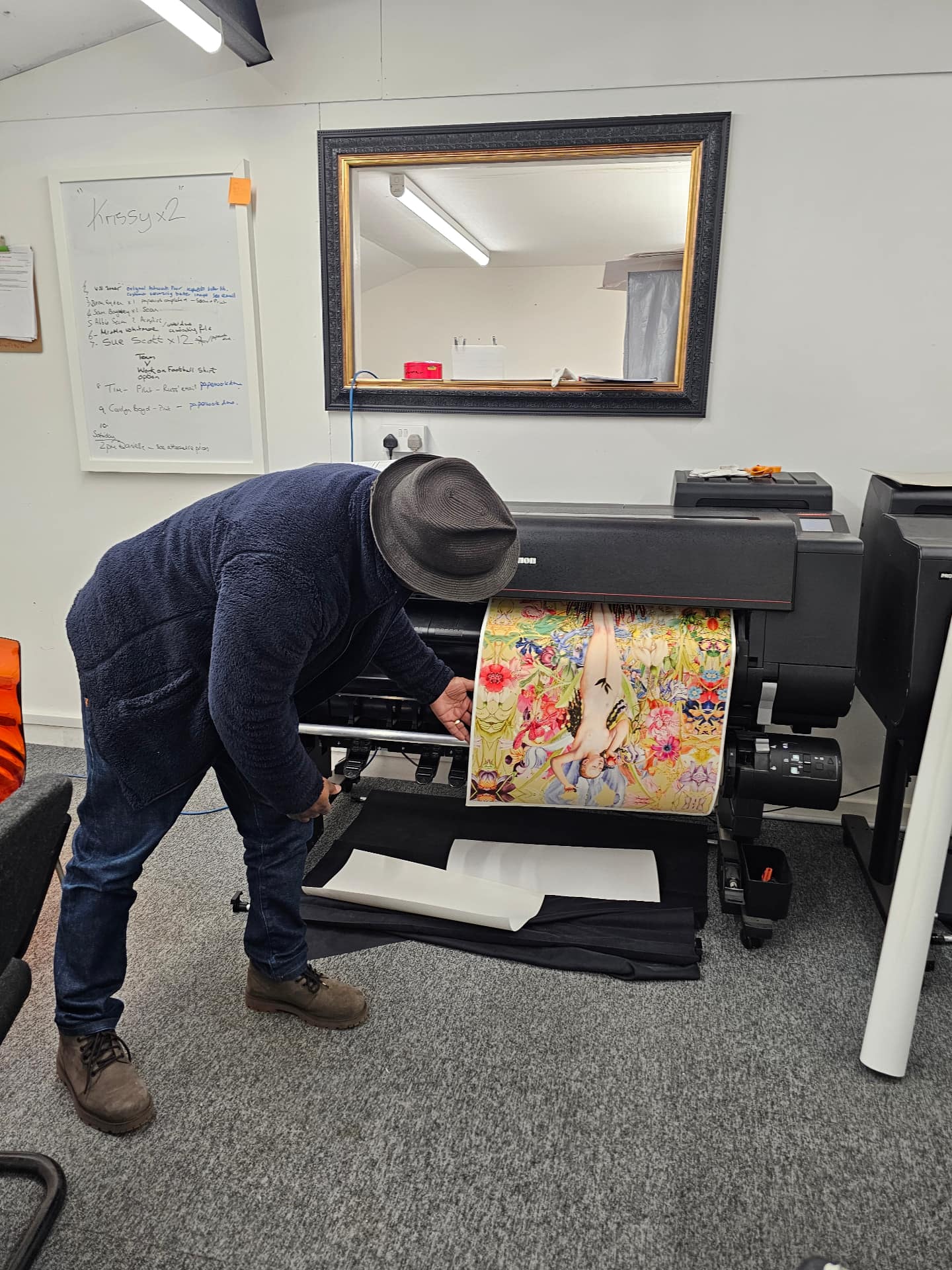
A giclée print on cheap poster paper is not really a giclée. The paper carries half the value. We print on Hahnemühle papers including Photo Rag, German Etching, Baryta Satin and Bamboo because they are acid-free, archival and specifically engineered for pigment inks. Our guide to the best paper for giclée prints breaks down which surface suits which artwork.
What about “archival” and “museum” prints?
These are marketing terms more than technical standards. An “archival” print should mean acid-free materials and pigment inks, but it isn’t regulated. A “museum” print usually implies giclée-quality materials and longevity ratings. If you’re unsure, ask the printer: what paper, what inks, and what printer? A reputable print studio will answer immediately.
How we handle it at Love to Frame
We don’t hide behind labels. Whether you order a fine art print or a limited edition giclée, you get the same colour-managed workflow, the same archival papers and the same option to approve a test strip before we print the full edition. The difference is usually the editioning, signing and paper choice — not the care that goes into it.
Still deciding between giclée and fine art printing? Send us a photo of the work and tell us what you’re using the print for — we’ll recommend the right paper and process honestly.
Ready to start a project?