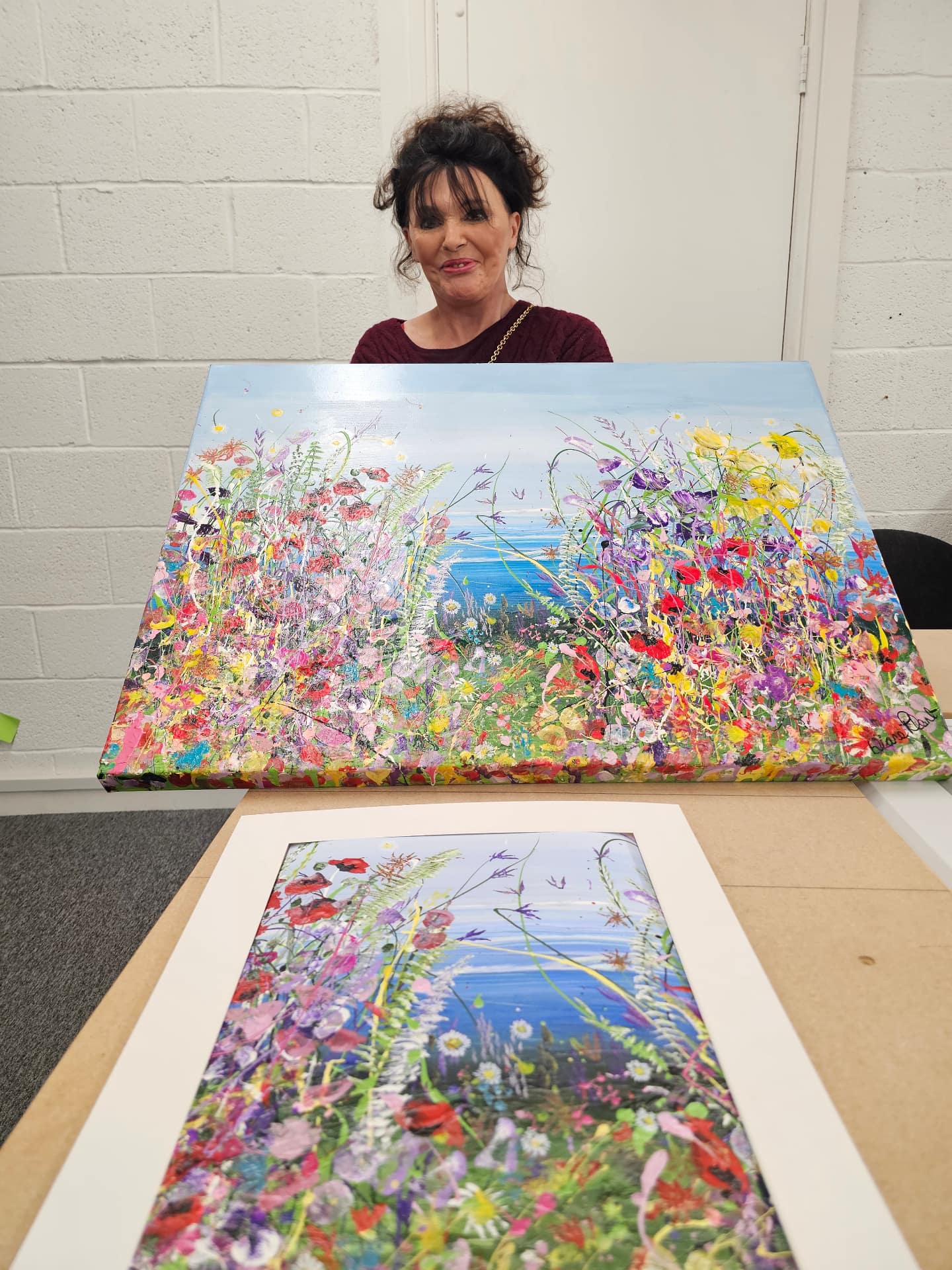
A step-by-step guide for artists: from booking a scan to receiving high-resolution files ready for giclée printing, archiving or selling as limited editions.
If you’re an artist, digitising your original work is one of the most valuable things you can do for your career. A great scan protects the original, unlocks a second income stream through prints, and gives you the files you need for portfolios, gallery submissions and press. Here’s exactly how the process works at our Timperley scanning studio — and how to get the best results from it.
Step 1 — Get in touch and book your scan
Every job starts with a quick conversation. Drop us a message with the size of the piece, the medium (oil, acrylic, watercolour, mixed media, pastel, pencil), and what you plan to do with the files — whether that’s a one-off high-res archive, a run of limited edition giclée prints, or ongoing dropshipping through our Artist Support programme. We’ll confirm timings, pricing and whether your piece is best suited to our flatbed scanner or our 3D texture scanner.
Step 2 — Bringing your artwork in
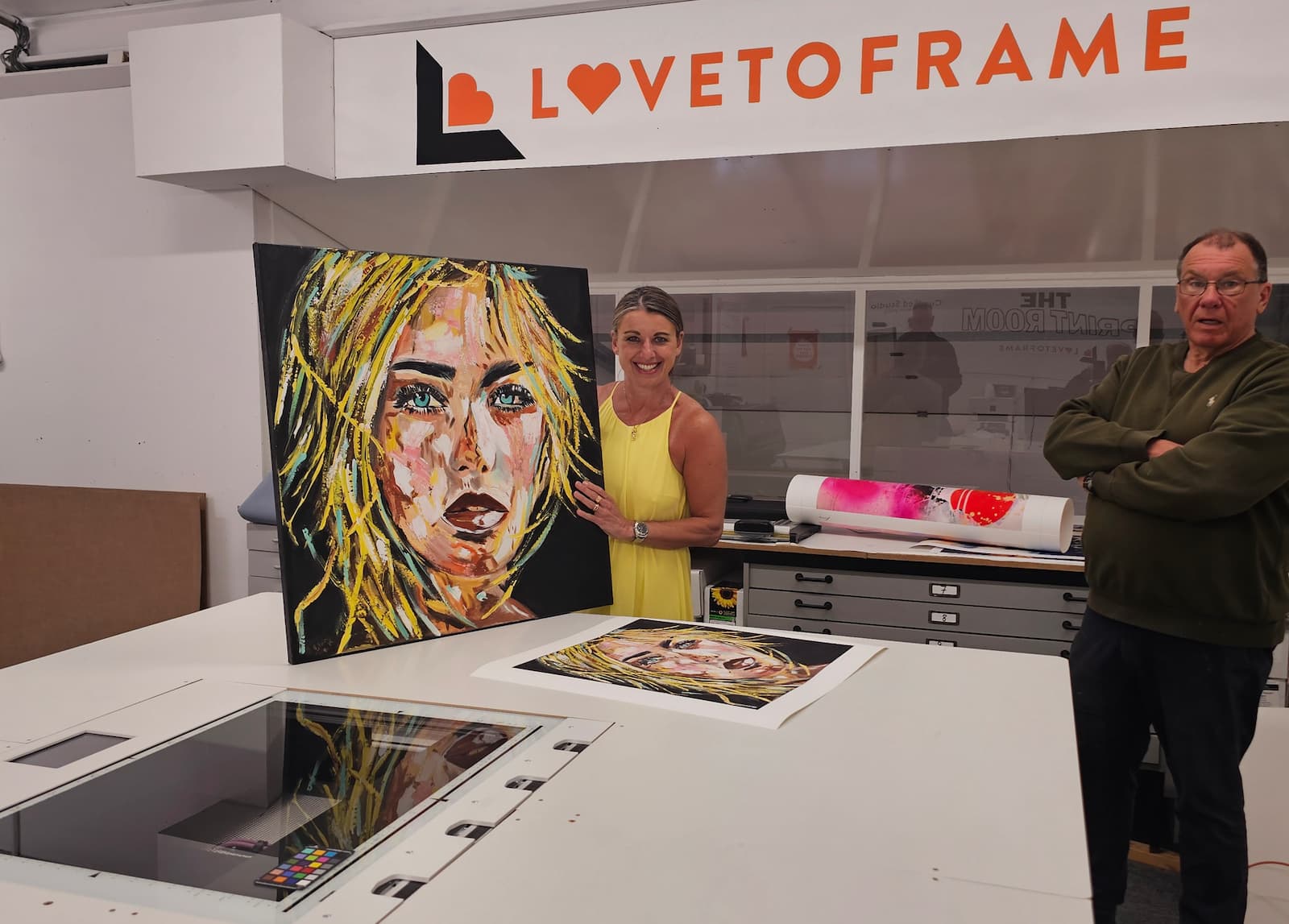
You can drop the work off in person at the studio, or we can arrange collection for larger pieces. If you’re posting or couriering, we’ll talk you through safe packing — corner protectors, rigid backing and moisture-resistant wrapping — before the piece leaves your studio. Unframed work generally scans best, but we regularly handle framed pieces where removal isn’t possible.
Step 3 — The scan itself
For flat work up to A1 we use a calibrated fine art scanner that captures every detail at 600–1200dpi with true colour accuracy. For textured or oversized pieces — oils, palette-knife work, heavy acrylics and anything up to 3m x 2m — we use our 3D painting scanner which captures brushstroke depth and eliminates the glare that traditional flatbed scanners can’t solve. Either way, colour is checked against the original under controlled daylight so what you see on screen matches what’s in front of us.
Step 4 — Colour matching and file delivery
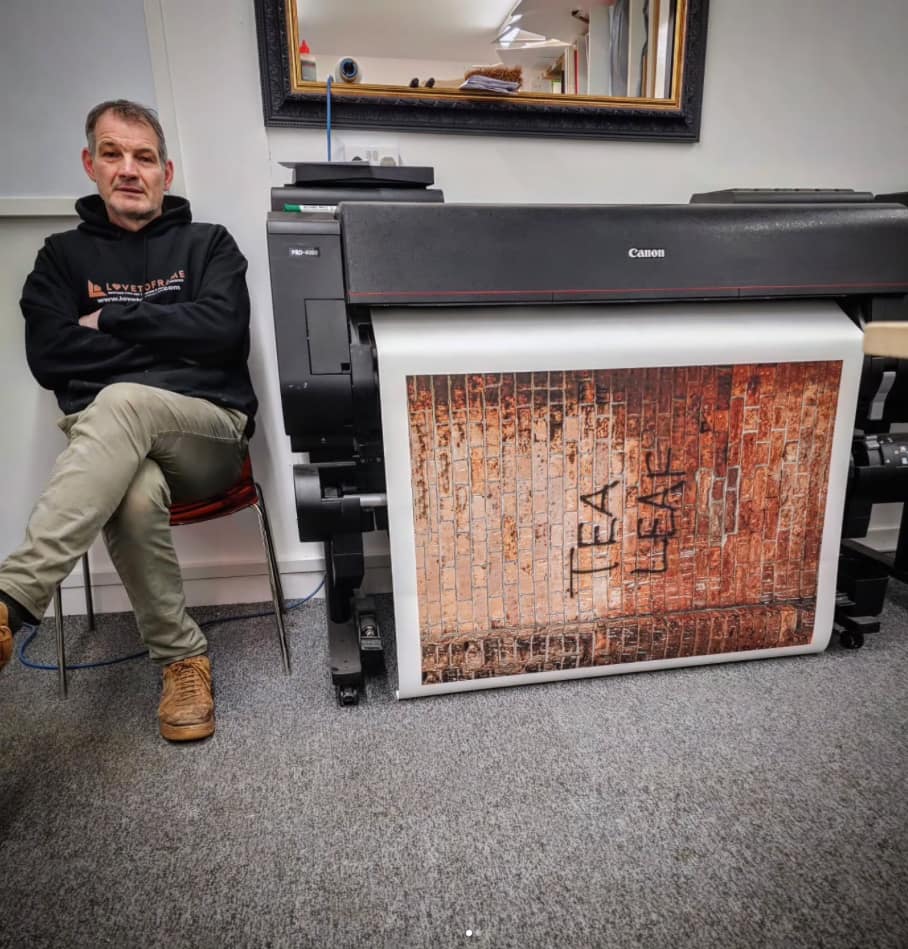
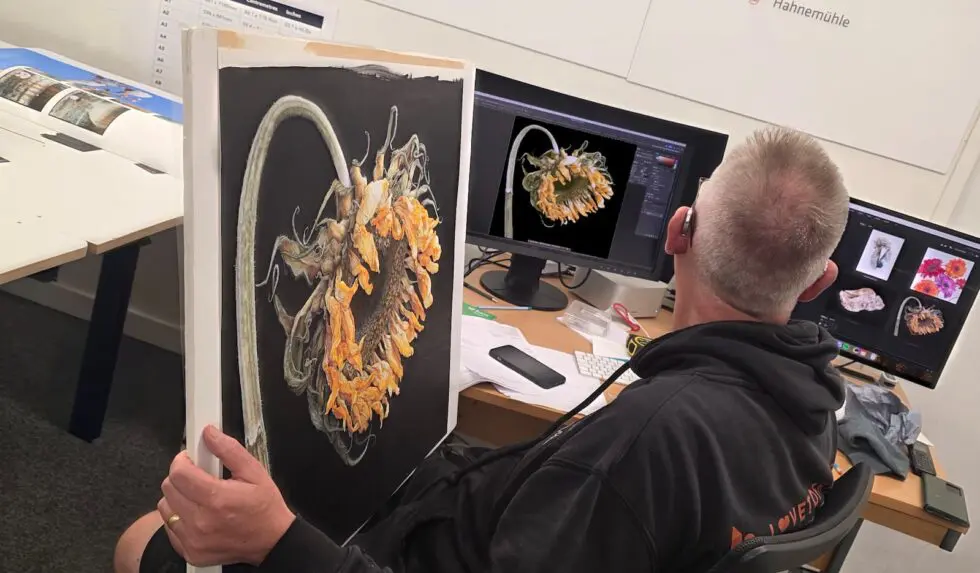
Every scan is soft-proofed and colour-matched by eye against your original before files are released. You’ll receive a high-resolution master TIFF (for archive and printing) plus web-ready JPGs. Files are delivered via secure download — we keep a backup copy on file so future prints match perfectly, even years later.
Step 5 — From file to finished print
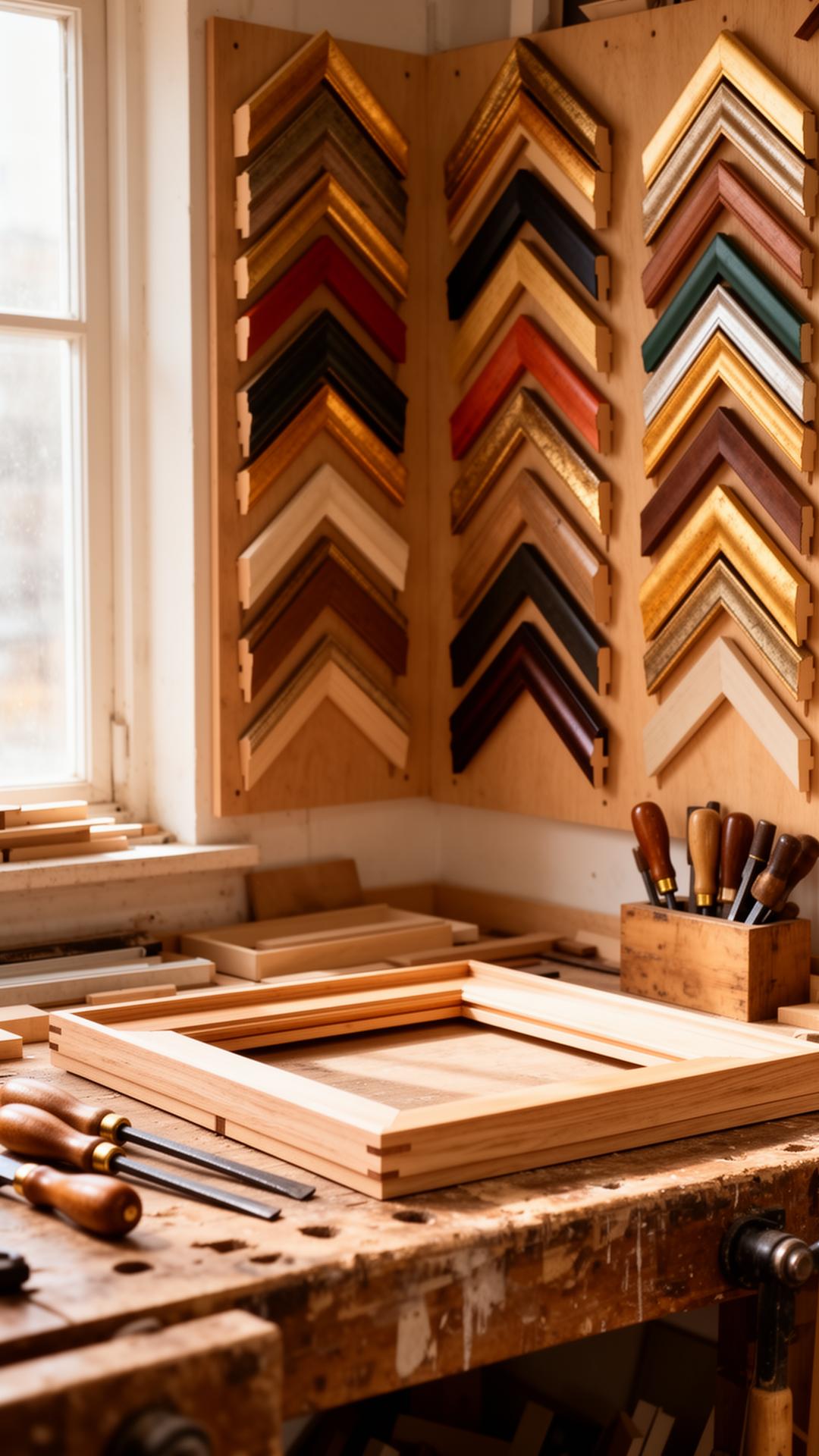
Most artists we work with go on to print. Once we have your master file we can produce museum-quality giclée prints on Hahnemühle papers, hand-stretched canvases, or a full editioned run with signing and numbering. Because the file lives with us, you can reorder on demand — no re-scanning, no colour drift.
Common questions
How long does a scan take? Most single pieces are scanned, colour-matched and delivered within 3–5 working days. Rush work can usually be turned around faster — ask when you book.
What’s the largest piece you can scan? Up to 3m x 2m in a single pass on the 3D scanner. Larger works can be stitched.
Do I keep the copyright? Always. You own the artwork and the files — we simply hold a working copy so reprints stay consistent.
Ready to digitise your work? Get in touch or use our reproduction calculator for an instant quote.
Ready to start a project?