Photography, flatbed scanning or 3D texture scanning — which reproduction method is right for your painting? A plain-English guide from the Love to Frame studio.
“What’s the best way to reproduce a painting?” is probably the question we’re asked most. The honest answer is: it depends on the piece. Photography, flatbed scanning and 3D texture scanning are three very different tools, and the right one for you comes down to the medium, the size, and what you plan to do with the files. Here’s how we think about it.
Option 1 — Photographing your artwork
A good camera setup can produce lovely results for flat work — watercolours, drawings, screen prints and pastels. The catch is that photography introduces a lens, a light source and a set of physics that all have to be controlled. Even with polarising filters, glossy or textured surfaces almost always show hotspots, and colour accuracy depends heavily on the photographer’s calibration workflow. For social media and portfolios, phone or DSLR photos are fine. For prints you plan to sell, they usually aren’t.
Option 2 — Flatbed fine art scanning
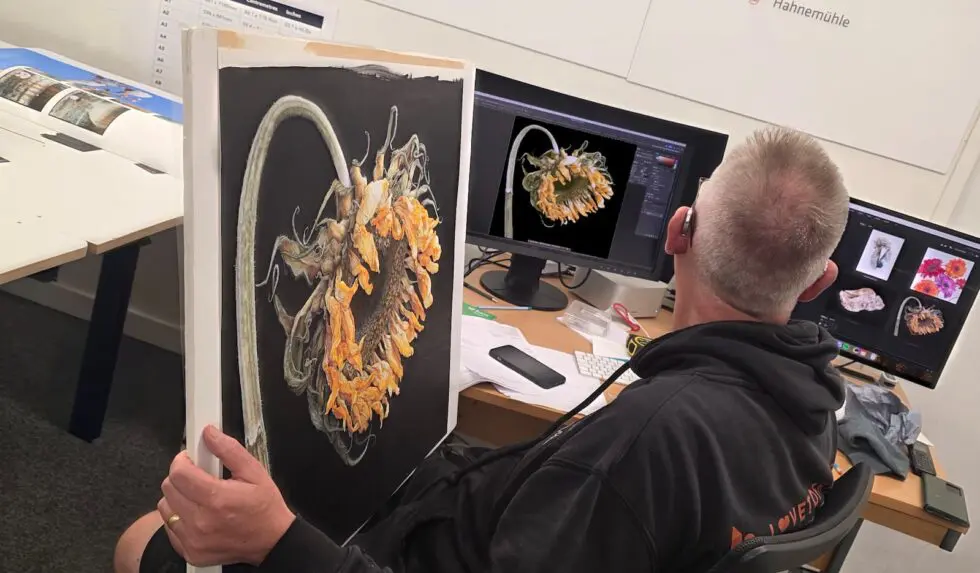
A proper flatbed fine art scanner is the gold standard for flat media. Because the artwork sits directly on the platen and is lit uniformly, there’s no lens distortion, no glare and no perspective shift — just perfectly even, colour-managed capture at 600–1200dpi. It’s ideal for watercolours, acrylics on paper, prints, drawings and photographs. The trade-off is size: most flatbeds cap out at A1 or A2. Anything larger, and you’re stitching multiple scans — or moving to a 3D scanner.
Option 3 — 3D texture scanning
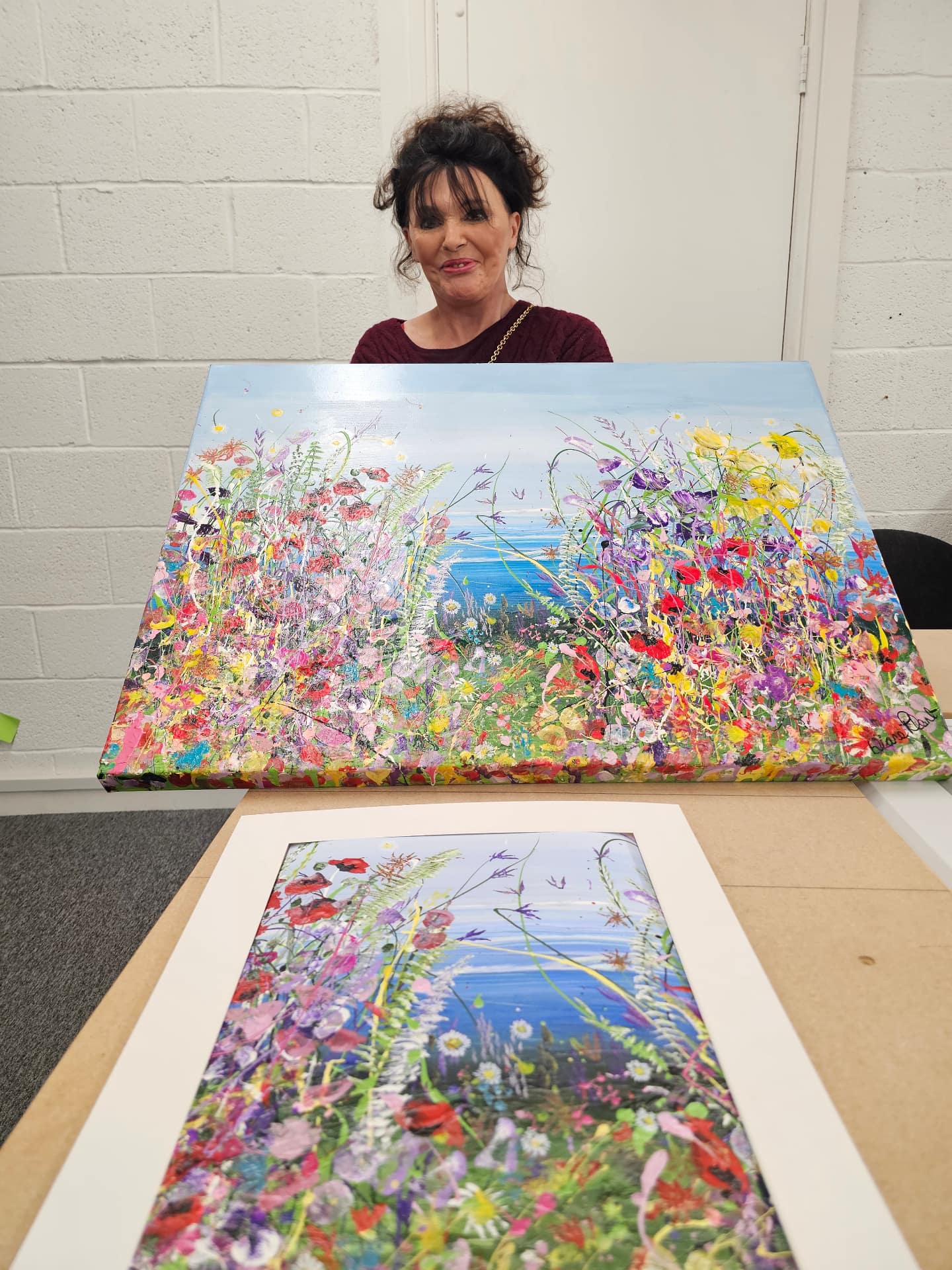
This is where things get interesting — and where most reproduction studios simply can’t compete. Our 3D painting scanner captures both the image and the surface topology of the piece, so brushstrokes, palette-knife ridges and impasto are recorded in three dimensions. Because the scanner works with its own controlled lighting, glare on oil paintings — the single biggest headache in art reproduction — simply isn’t a factor. And because it’s not constrained to a platen, we can capture work up to 3m x 2m in a single pass.
Which one is right for your work?
- Watercolour, drawing, print (up to A1): flatbed scanning — sharpest, cleanest, most colour-accurate result.
- Oil painting, heavy acrylic, palette knife work: 3D scanning — the only method that handles glare and texture properly.
- Oversized canvases (over A1): 3D scanning — single-pass capture up to 3m x 2m, no stitching artefacts.
- Sketchbook shots, in-progress photos, social: a phone or DSLR is fine — you don’t need a scan.
Why it matters for print quality
The quality of your capture sets the ceiling on every print you make. A great giclée print can only be as good as the file behind it — if the scan is soft, colour-shifted or hotspotted, no amount of clever printing will rescue it. Getting the reproduction stage right is what lets artists sell prints confidently, produce editions that match year after year, and license work to galleries and publishers.
Not sure which method suits your piece? Send us a photo of the work and we’ll tell you honestly which approach we’d recommend — and why.
Ready to start a project?