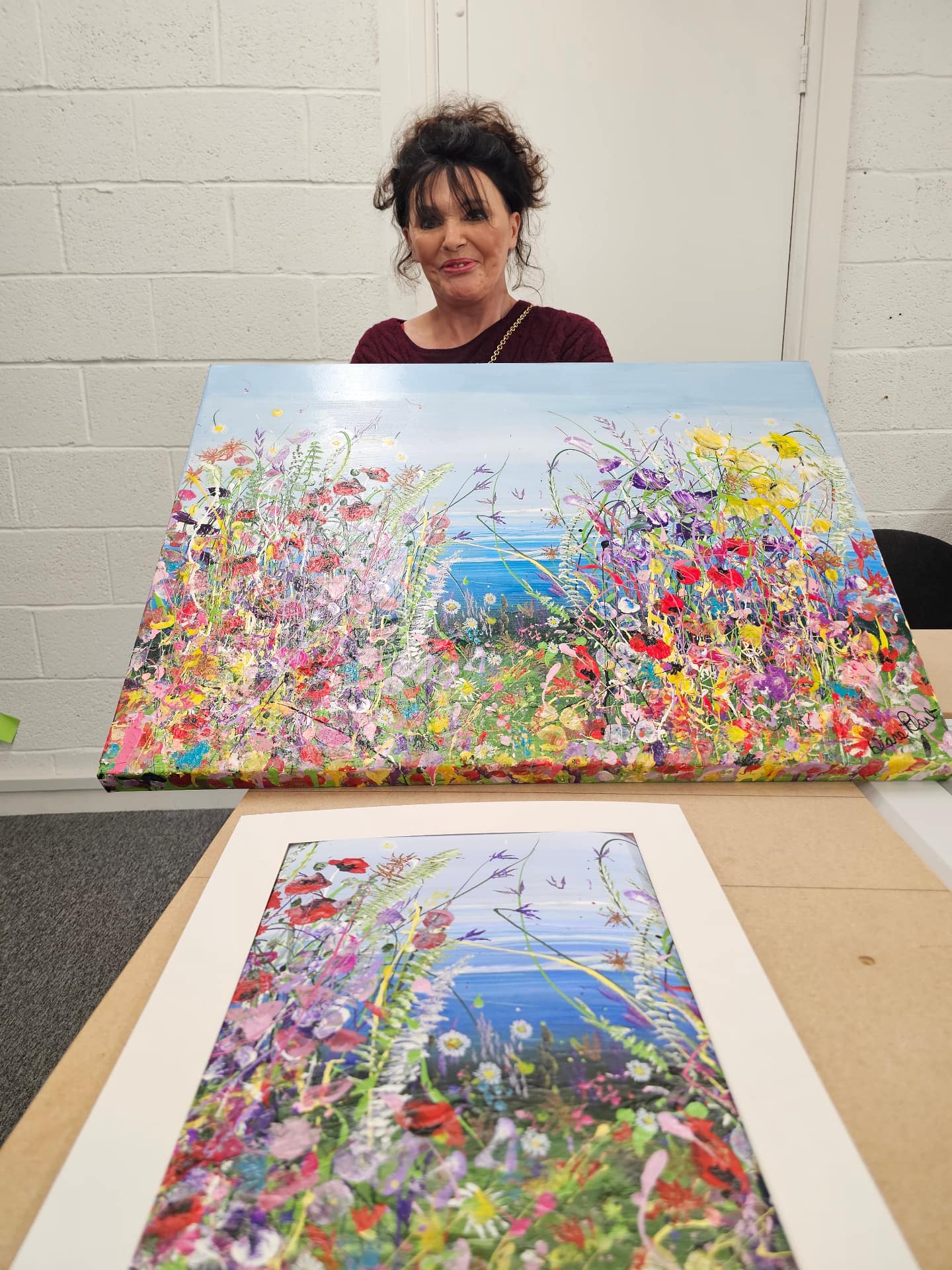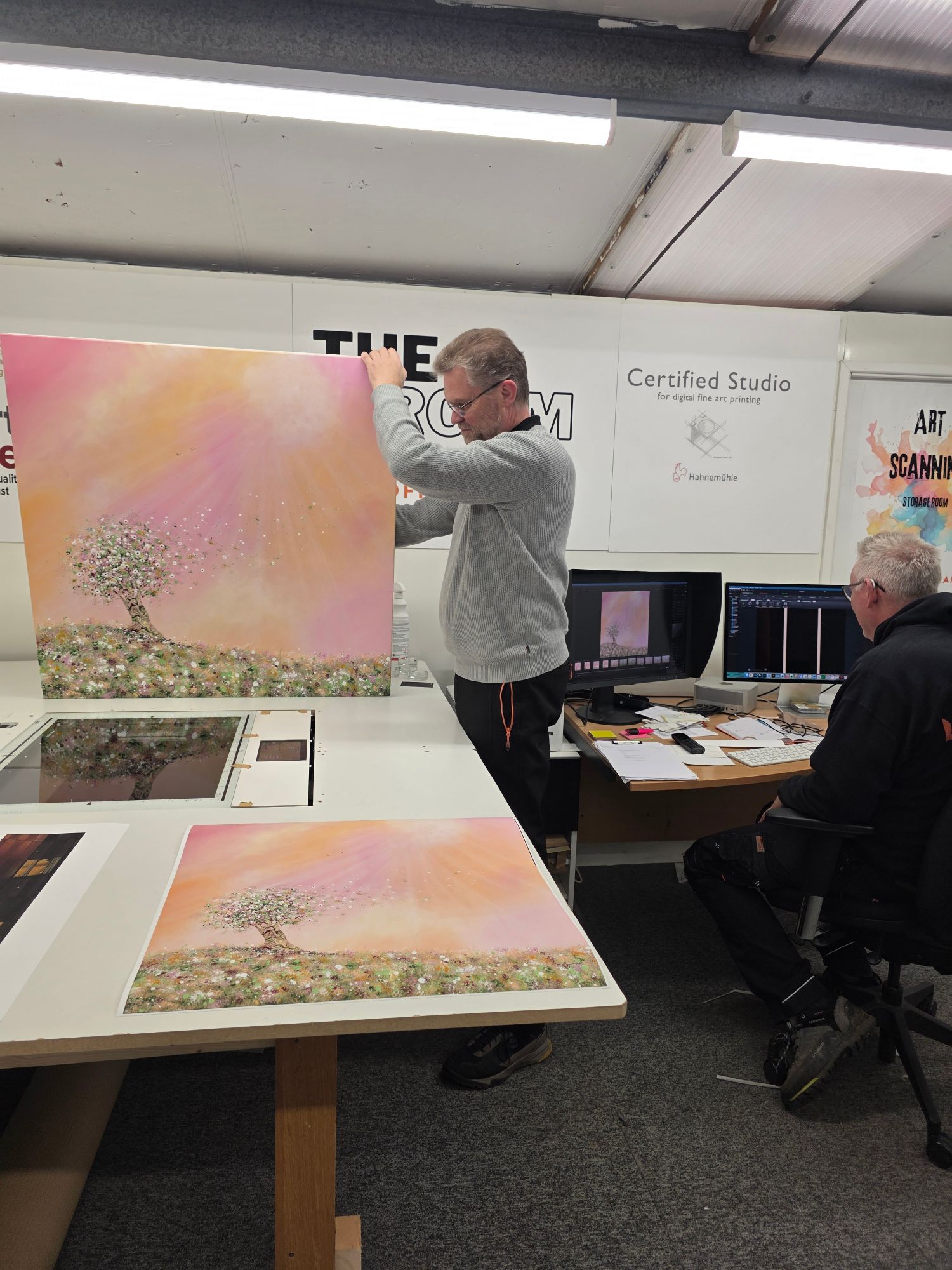
When Sarah Otter brought a blossom painting to our Timperley studio, the brief was simple: scan the original, match the colour, and produce a run of fine art prints. This page walks through the real job, start to finish.
When Sarah Otter brought one of her blossom paintings to our Timperley studio, the brief was simple: scan the original, match the colour, and produce a run of fine art prints she can sell as her own. This page walks through that real job, from capturing a hand-painted original without losing the brush strokes, to why the paper choice matters as much as the printer, to what a certification like Hahnemühle’s actually means. Along the way it covers what to expect if you’re an artist thinking about selling prints of your own work.
The job at a glance
Who is Sarah Otter?
Sarah Otter is a well-established artist who works in a hand-painted style, with her blossom paintings among the pieces she offers to buyers. You can see her work on Instagram at @little.art. She’s one of the artists we work with, and brought her original to our studio so she could offer a faithful run of prints without parting with the painting itself.
The job: an original in, a run of prints out
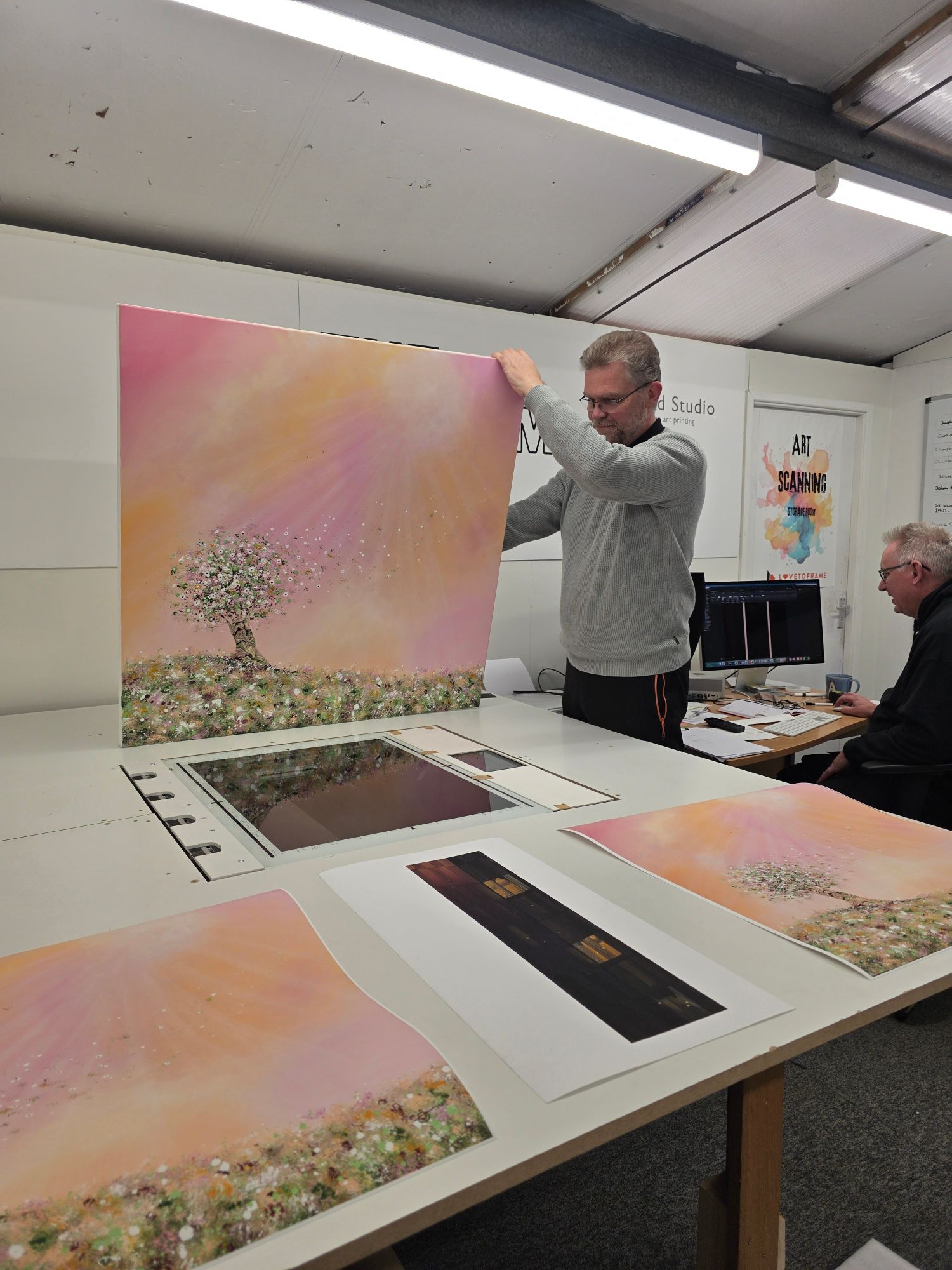
A hand-painted blossom original scanned, colour-matched against the painting in front of the scanner, and printed on a fine art paper that suits the work, ready for Sarah to offer as prints. The brief sounds simple. The reason it works is that each step is decided by the artwork rather than by habit: which scan, which paper, which finish.
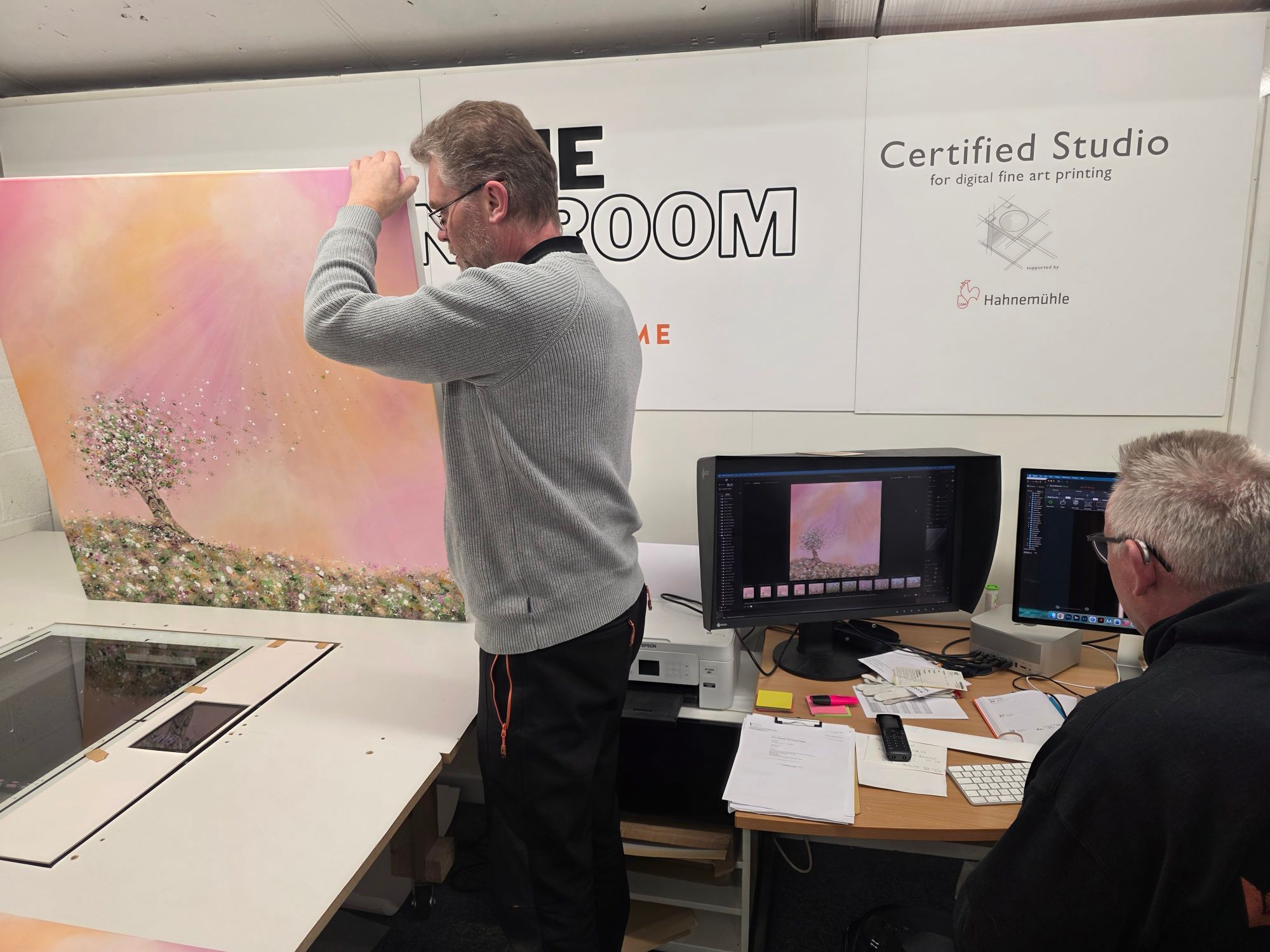
“With Sarah’s work, we use our 3-D scanner to capture every detail of her original painting, brush marks and all. We know how to present that kind of work and which paper suits it.”
Capturing the blossom: why a 3-D scan, not a photo
The ridges and valleys a brush leaves behind are what make a painting look painted, and they’re exactly what a quick photograph flattens out. A 3-D scan reads the surface of the painting as well as the colour, so that texture survives into the print file. Blossom paintings in particular carry a lot of delicate paint movement around the petals; a flat photo tends to lose it.
That’s the difference between a reproduction and a copy. A phone photo of a painting loses the texture and usually the true colour too, and a flatbed scanner can’t take a stretched canvas at all. The scan also outlasts the job: once an original has been captured and proofed, the file is archived, so reprints never need the painting back and print ten matches print one. If you’re weighing the options for your own work, we’ve written a plain guide to 3-D scanning vs photographing artwork. The short version: for painterly work with visible texture, the scan wins every time.
The paper: choosing stock that suits the painting
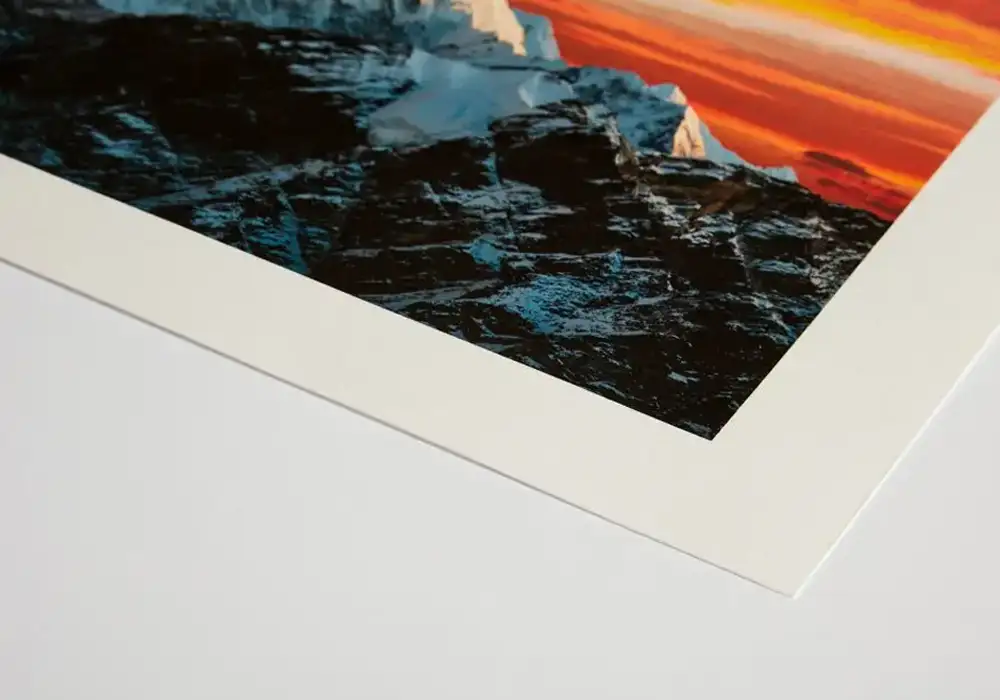
Sarah’s blossom prints go on a textured fine art paper that suits the painting’s hand-painted feel, picked after she and the print team looked at samples together against the original. We hold a working range of Hahnemühle papers in the studio, led by Heritage Rag 310 and Portrait Rag 305 as our go-tos for painterly work, with German Etching and Photo Rag alongside for different surfaces and finishes.
Choosing the stock is part of the job, not an upsell. A watercolour, an oil with heavy impasto and a pencil study all want different papers. Sarah’s work found the right match, and yours might suit something smoother or softer. Our guide to choosing the paper for giclée prints walks through how we decide, and if you’d rather feel the difference than read about it, ask to see printed samples when you visit.
What “Hahnemühle Gold Certified Studio” means
It’s Hahnemühle’s own certification, not a badge we gave ourselves. Hahnemühle, the German paper mill behind the papers above, runs a Certified Studio programme that certifies print studios on printing excellence and quality consistency with its papers, and Gold is one of its named certification levels. We print as a Hahnemühle Gold Certified Studio in Timperley.
For an artist handing over an original, that’s the point of the whole arrangement:
“She trusts us because we’re a Hahnemühle Gold Certified Studio, and she trusts our print team.”
How we price a job like this
Printing is priced on things you can see and choose, mainly the size of the print and the paper it goes on, and for most fine art prints the fine art printing calculator gives you an instant, itemised figure. Scanning is quoted per job from £20, because original artwork varies: send us the artwork’s size and we’ll come back with a price. For a run of prints, the colour work and proofing are done once and shared across the run, which is why artists selling their work usually print in batches or on demand from the approved file rather than one-off each time.
The result
An original painting in, a run of fine art prints out, inside a week on this job, with the brush marks still visible in the print and the colour checked against the original before anything left the studio. The scan is archived, so when Sarah sells a design and comes back for another run, the next batch comes from the approved file and matches the last one. When a customer buys a print from her, we print it to order and post it direct to the buyer, so Sarah sells and we handle fulfilment.
FAQs
Do I need to leave my original with you?
Only for the scan itself. You can usually collect the original within a few days, and because the scan is archived, you never need to bring the painting back for reprints.
Can you print one at a time, as they sell?
Yes. Once your artwork is scanned and proofed, we keep the approved file and print on demand: one print or a batch, the same colour every time.
Can you ship prints direct to my buyers?
Yes. We print each sold print to order and post it direct to the buyer, so you can sell without holding stock, packing prints or running to the post office. Scan once, sell many, let us handle fulfilment.
Which paper will my work go on?
The one that suits it. That’s a conversation, not a menu: textured papers suit painterly work, while smoother stocks suit fine detail and photography. We’ll show you samples.
What does it cost?
It depends on size and paper more than anything else. The calculator gives you an instant itemised figure for prints, and scanning is quoted per job from £20.
How long does it take?
This job ran start to finish in under a week. As a rule of thumb, fine art printing runs 1 to 3 working days once the files and paper are agreed, and jobs are often shipped the same day; scanning is scheduled in alongside it. Tell us your deadline and we’ll be straight about whether it’s doable.
Do you only work with artists in Manchester?
We’re in Timperley and plenty of artists bring work in person, but prints travel well. We print and deliver across the UK.
Services we used
- Artwork scanning & reproduction
- Fine art / giclée printing
- Print on demand & direct-to-buyer shipping
- Fine art printing calculator
Thinking about prints of your own work? Bring a painting in, or send us a photo and its size and we’ll tell you honestly what it needs: scan, paper and price.
Ready to start a project?